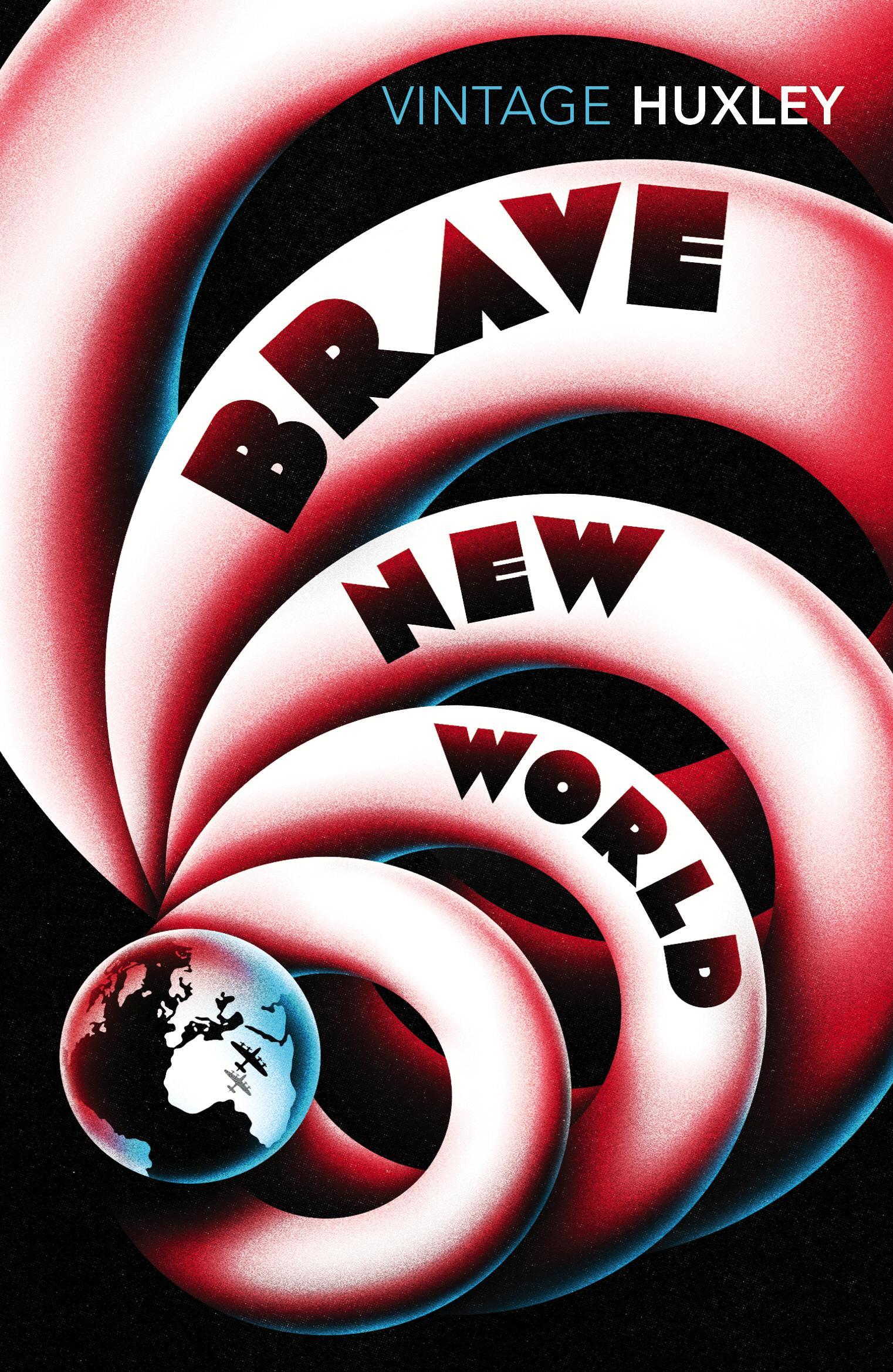
Brave New World is a dystopian novel by English author Aldous Huxley, written in 1931 and published in 1932. Largely set in a futuristic World State, inhabited by genetically modified citizens and an intelligence-based social hierarchy, the novel anticipates huge scientific advancements in reproductive technology, sleep-learning, psychological manipulation and classical conditioning that are combined to make a dystopian society which is challenged by only a single individual: the story's protagonist.
This is one of the most clever books I've ever read. Full of insights, is a thrilling story and, at the same time, a trigger for a lot of further questions and a key to understand our present times.
What puzzles me the most is that it was written almost a century ago !
Imagina un futuro donde todos son felices... porque no les queda otra. En Un mundo feliz, la sociedad funciona como una máquina bien engrasada: los bebés se fabrican en laboratorios, las emociones se controlan con pastillas (el famoso soma), y el amor, el arte y el sufrimiento son conceptos obsoletos. Todo está diseñado para la estabilidad, incluso a costa de la libertad.
Huxley nos clava un espejo incómodo: ¿preferirías una vida sin dolor pero también sin significado, o el caos de sentir, equivocarte y ser humano? El libro, escrito en 1932, sigue dando yuyu porque plantea preguntas que hoy resuenan más que nunca: ¿hasta dónde llegamos por comodidad? ¿Qué sacrificamos por no pensar?
I really enjoyed reading this book, the style of writing is such a delight.
For example when everything starts speeding up, different scenes intertwined with each other, but in a way that you can still keep up with what is happening where.
The philosophical discussion towards the end was especially interesting.
I don't think that anyone could ever be happy like that (even if conditioned).
As Mark Deck (TheClick) put it so nicely: Happiness is a progress.
Happiness [isn't] achieved and everlasting.
Happiness [...] requires constant investment.
It's like the curve of how life is currently tilting [...], do I feel like things are going in the right direction, am I improving myself [...]?
[...] when you achieve a goal you will just look towards the next goal after that. There's always a thing after, so it's more about the journey as a whole [...] rather than the specific singular …
I really enjoyed reading this book, the style of writing is such a delight.
For example when everything starts speeding up, different scenes intertwined with each other, but in a way that you can still keep up with what is happening where.
The philosophical discussion towards the end was especially interesting.
I don't think that anyone could ever be happy like that (even if conditioned).
As Mark Deck (TheClick) put it so nicely: Happiness is a progress.
Happiness [isn't] achieved and everlasting.
Happiness [...] requires constant investment.
It's like the curve of how life is currently tilting [...], do I feel like things are going in the right direction, am I improving myself [...]?
[...] when you achieve a goal you will just look towards the next goal after that. There's always a thing after, so it's more about the journey as a whole [...] rather than the specific singular achievement.
Or as Mark Manson put it:
Happiness comes from solving problems. The keyword here is "solving."
If you're avoiding your problems or feel like you don't have any problems, then you're going to make yourself miserable.
[...]
To be happy we need something to solve. Happiness is therefore a form of action; it's an activity.
The people in Brave New World don't have anything to solve, no ambitions, no passion... how could they ever be happy?