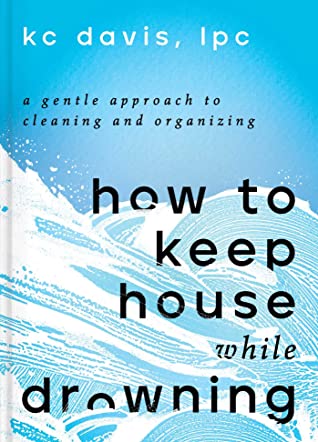
How to Keep House While Drowning will introduce you to six life-changing principles that will revolutionize the way you approach home care—without endless to-do lists. Presented in 31 daily thoughts, this compassionate guide will help you begin to get free of the shame and anxiety you feel over home care.
Inside you will learn:
· How to shift your perspective of care tasks from moral to functional
· How to stop negative self-talk and shame around care tasks
· How to give yourself permission to rest, even when things aren’t finished
· How to motivate yourself to care for your space
A lot of this was not novel to me (it’s not like I have not read advice for people with ADHD before) but it gives clear, concise and useful advice, some tips that I had not seen elsewhere before and was just overall quite motivating for me to make another round of adjustments to help get me through everything.
If you are looking for cleaning hacks, appendix 2 has a dozen or two of them, you can skip right there. This book isn't about cleaning.
This book is about decluttering your brain more than your house. Understanding the differences between what must be done and what you've internalized. The theme that this book comes back to is that these chores are morally neutral. Dusting, laundry, vacuuming are neither morally good nor evil. You'll be far better served if you find a reason to do them, find a work around to make them easier or not needed, or find the core need that actually needs to be done.
As an aside, this book touches on self care, which is something that always tickles my brain. I get the impression that some people use the term "self care" as a code for self indulgence. I like to think of it instead …
If you are looking for cleaning hacks, appendix 2 has a dozen or two of them, you can skip right there. This book isn't about cleaning.
This book is about decluttering your brain more than your house. Understanding the differences between what must be done and what you've internalized. The theme that this book comes back to is that these chores are morally neutral. Dusting, laundry, vacuuming are neither morally good nor evil. You'll be far better served if you find a reason to do them, find a work around to make them easier or not needed, or find the core need that actually needs to be done.
As an aside, this book touches on self care, which is something that always tickles my brain. I get the impression that some people use the term "self care" as a code for self indulgence. I like to think of it instead as caring for yourself as you would care for a friend. Would you insult a friend who didn't clean, or would you kindly help? If you could exercise your friend's body for them, would you as a kindness? I think that a healthier way to approach self-care is to treat yourself the way you would a treat friend.
This book is far less about helpful tips for actually doing the cleaning, and more about giving yourself permission not to be perfect. I cleared that hurdle long ago. I am sure there are many people who will gain a lot from this book, but I wasn't one of them.