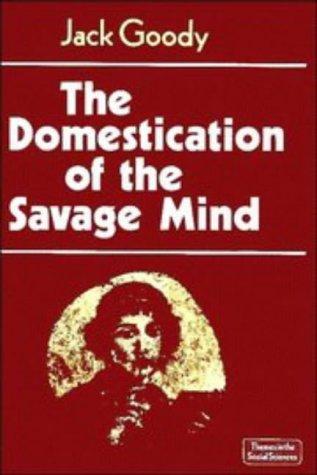

simulo@bookwyrm.social reviewed The Domestication of the Savage Mind by Jack Goody (Themes in the Social Sciences)
Possibilities rather than essentialism
4 stars
Goody criticizes typical we/they distinctions in anthropology, but also wants to explain differences. He does that not by the assumption of essential differences, but by use of media: reading and writing and what can be done with it. He points out that lists and tables were both common in early writing (and not so much transcriptions of speech) and that these genres of representation allow and enforce particular actions like ordering, classifying, decontextualizing, evaluating for consistency etc. I like that he does not attribute some mystical power to media that somehow "changes the mind" and gives particular cultures better ways of thinking but rather that there are things that can be done with media that allow these practices to become important and being used by people in power (e.g. keeping track of taxes). Readability is good overall. There is not much jargon and it is not difficult to follow Goody’s …
Goody criticizes typical we/they distinctions in anthropology, but also wants to explain differences. He does that not by the assumption of essential differences, but by use of media: reading and writing and what can be done with it. He points out that lists and tables were both common in early writing (and not so much transcriptions of speech) and that these genres of representation allow and enforce particular actions like ordering, classifying, decontextualizing, evaluating for consistency etc. I like that he does not attribute some mystical power to media that somehow "changes the mind" and gives particular cultures better ways of thinking but rather that there are things that can be done with media that allow these practices to become important and being used by people in power (e.g. keeping track of taxes). Readability is good overall. There is not much jargon and it is not difficult to follow Goody’s throughts, however, the chapters do not have much narrative flow between them, the presentation is more focused on structures than on process.