
Chris Kara reviewed Heart of darkness by Joseph Conrad
.
4 stars
Having read “King Leopold’s Ghost” made this easier to read for me. But the writing style was a bit of a challenge.
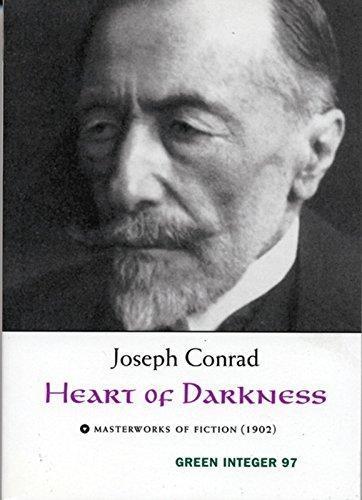
188 pages
English language
Published Jan. 19, 2003
Heart of Darkness (1899) is a novella by Polish-English novelist Joseph Conrad in which the sailor Charles Marlow tells his listeners the story of his assignment as steamer captain for a Belgian company in the African interior. The novel is widely regarded as a critique of European colonial rule in Africa, whilst also examining the themes of power dynamics and morality. Although Conrad does not name the river on which most of the narrative takes place, at the time of writing the Congo Free State, the location of the large and economically important Congo River, was a private colony of Belgium's King Leopold II. Marlow is given a text by Kurtz, an ivory trader working on a trading station far up the river, who has "gone native" and is the object of Marlow's expedition. Central to Conrad's work is the idea that there is little difference between "civilised people" and …
Heart of Darkness (1899) is a novella by Polish-English novelist Joseph Conrad in which the sailor Charles Marlow tells his listeners the story of his assignment as steamer captain for a Belgian company in the African interior. The novel is widely regarded as a critique of European colonial rule in Africa, whilst also examining the themes of power dynamics and morality. Although Conrad does not name the river on which most of the narrative takes place, at the time of writing the Congo Free State, the location of the large and economically important Congo River, was a private colony of Belgium's King Leopold II. Marlow is given a text by Kurtz, an ivory trader working on a trading station far up the river, who has "gone native" and is the object of Marlow's expedition. Central to Conrad's work is the idea that there is little difference between "civilised people" and "savages." Heart of Darkness implicitly comments on imperialism and racism. The novella's setting provides the frame for Marlow's story of his fascination for the prolific ivory trader Kurtz. Conrad draws parallels between London ("the greatest town on earth") and Africa as places of darkness.Originally issued as a three-part serial story in Blackwood's Magazine to celebrate the 1000th edition of the magazine, Heart of Darkness has been widely republished and translated in many languages. It provided the inspiration for Francis Ford Coppola's 1979 film Apocalypse Now. In 1998, the Modern Library ranked Heart of Darkness 67th on their list of the 100 best novels in English of the 20th century.
Having read “King Leopold’s Ghost” made this easier to read for me. But the writing style was a bit of a challenge.
Conflicting feelings about this book.
There's a lot that I did like about it. I liked the story and the meandering structure of it.
I liked the darkness of it.
I liked how dammit it was of colonialism.
But I did not enjoy the writing style very much. I felt overwhelmingly like I didn't know who was saying what, who they were saying it to, what they were referring to.
This feeling grew more and more as the book went on and I suppose that's more or less the point isn't it - that we're feeling the descent into the madness of the narrator. But it was just a challenging read for me, and without enough reward to pay off the effort.
I really wanted to like this book. It's a classic isn't it? You're supposed to like it. Everyone talks about how great it is. But I just couldn't …
Conflicting feelings about this book.
There's a lot that I did like about it. I liked the story and the meandering structure of it.
I liked the darkness of it.
I liked how dammit it was of colonialism.
But I did not enjoy the writing style very much. I felt overwhelmingly like I didn't know who was saying what, who they were saying it to, what they were referring to.
This feeling grew more and more as the book went on and I suppose that's more or less the point isn't it - that we're feeling the descent into the madness of the narrator. But it was just a challenging read for me, and without enough reward to pay off the effort.
I really wanted to like this book. It's a classic isn't it? You're supposed to like it. Everyone talks about how great it is. But I just couldn't quite gel with it; honestly if it weren't so short I probably wouldn't have even finished it.