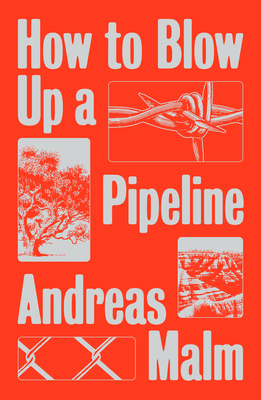
Why resisting climate change means combatting the fossil fuel industry
The science on climate change has been clear for a very long time now. Yet despite decades of appeals, mass street protests, petition campaigns, and peaceful demonstrations, we are still facing a booming fossil fuel industry, rising seas, rising emission levels, and a rising temperature. With the stakes so high, why haven’t we moved beyond peaceful protest?
In this lyrical manifesto, noted climate scholar (and saboteur of SUV tires and coal mines) Andreas Malm makes an impassioned call for the climate movement to escalate its tactics in the face of ecological collapse. We need, he argues, to force fossil fuel extraction to stop—with our actions, with our bodies, and by defusing and destroying its tools. We need, in short, to start blowing up some oil pipelines.
Offering a counter-history of how mass popular change has occurred, from the democratic revolutions …
Why resisting climate change means combatting the fossil fuel industry
The science on climate change has been clear for a very long time now. Yet despite decades of appeals, mass street protests, petition campaigns, and peaceful demonstrations, we are still facing a booming fossil fuel industry, rising seas, rising emission levels, and a rising temperature. With the stakes so high, why haven’t we moved beyond peaceful protest?
In this lyrical manifesto, noted climate scholar (and saboteur of SUV tires and coal mines) Andreas Malm makes an impassioned call for the climate movement to escalate its tactics in the face of ecological collapse. We need, he argues, to force fossil fuel extraction to stop—with our actions, with our bodies, and by defusing and destroying its tools. We need, in short, to start blowing up some oil pipelines.
Offering a counter-history of how mass popular change has occurred, from the democratic revolutions overthrowing dictators to the movement against apartheid and for women’s suffrage, Malm argues that the strategic acceptance of property destruction and violence has been the only route for revolutionary change. In a braided narrative that moves from the forests of Germany and the streets of London to the deserts of Iraq, Malm offers us an incisive discussion of the politics and ethics of pacifism and violence, democracy and social change, strategy and tactics, and a movement compelled by both the heart and the mind. Here is how we fight in a world on fire.
My number one critique of this book is that it had so many opportunities to share and relate revolutionary movements throughout history to the climate movement, and it did not. Even worse, there were parts of the book that critiqued attacks on oil pipelines in the SWANA region that were connected to local anti-imperialist movements, without drawing the connection between anti imperialism and the climate movement (embarrassing, frankly).
That said, I think the book is a fine introduction to the idea that violence in the form of property destruction is a legitimate action to take, although I wish the book made a stronger case to the idea of armed resistance in the pursuit of national democracy and socialism. I also think the last chapter of the book was the strongest, since it offered good critiques of climate doomerism.
Anyway, I shouldn't be surprised lol, but whatever, it was fine.
Brutally bleak subject matter, but inspirational in its drive toward radical agency amidst despair and doomerism
5 stars
This book is not a how-to guide for eco-terrorism. It is a theoretical analysis of the tactics that have been utilized by the climate movement thus far. The author chose a catchy title to suggest that violence against property is something that he thinks is necessary.
Also, I have zero intention of ever becoming an 'eco-terrorist' just because I found parts of this book inspiring. I have no intention of committing acts of criminal violence against property or risking my freedom by doing anything similar. I have a 6-month old kiddo who needs his dad to not be in jail or on the lam.
Having said that, this book is one that I think everyone involved in the climate movement ought to read, even/especially if you don't agree with the central premise of this book: that non-violent pacifism in not, by itself, enough to move the needle on meaningful action …
This book is not a how-to guide for eco-terrorism. It is a theoretical analysis of the tactics that have been utilized by the climate movement thus far. The author chose a catchy title to suggest that violence against property is something that he thinks is necessary.
Also, I have zero intention of ever becoming an 'eco-terrorist' just because I found parts of this book inspiring. I have no intention of committing acts of criminal violence against property or risking my freedom by doing anything similar. I have a 6-month old kiddo who needs his dad to not be in jail or on the lam.
Having said that, this book is one that I think everyone involved in the climate movement ought to read, even/especially if you don't agree with the central premise of this book: that non-violent pacifism in not, by itself, enough to move the needle on meaningful action to reduce fossil fuel consumption / GHG emissions.
I'm certainly not planning to blow up a pipeline after reading this book, and it was discouraging to read of the racist history of climate activists in the near past (and the continued racist use of the words "Indians" and "tribes" to refer to groups of stealthy vandals throughout the book). Essentially, people went around deflating tires and used indigenous labels as calling cards. The author acknowledges that might have been insensitive, but then continues using the language extensively.
As painful as it might be, I do think this is a book I'd recommend for climate-concerned folks, if only for its unique perspective, its case for radical agency in the face of crippling despair, and its insistent disavowal of doomerism.
I'm forced to reflect on my own history of peacebuiding
3 stars
Andreas Malm has a simple thesis - that property violence is both necessary and justified in the struggle to end fossil fuels. Much of the book is spent critiquing Gandhi as well as Chenoweth and Stephan, heroes of my youth and my early peacebuilding career, respectively.
Malm argues that a violent wing to a broader movement is critical for that movement to achieve its objectives - that every Martin needs his Malcolm, etc. And he actively disputes the research and thesis of Chenoweth and Stephan's signature text, "Why Civil Resistance Works". He characterizes insistence on non-violence as the stance of the privileged who will bear the least of the burden as we descend into climate chaos.
As I write this, the U.S. Congress has passed an historic climate bill, investing $369 billion to overhaul our energy and transportation sectors. Through a combination of carrots and regulatory sticks, analysts predict that …
Andreas Malm has a simple thesis - that property violence is both necessary and justified in the struggle to end fossil fuels. Much of the book is spent critiquing Gandhi as well as Chenoweth and Stephan, heroes of my youth and my early peacebuilding career, respectively.
Malm argues that a violent wing to a broader movement is critical for that movement to achieve its objectives - that every Martin needs his Malcolm, etc. And he actively disputes the research and thesis of Chenoweth and Stephan's signature text, "Why Civil Resistance Works". He characterizes insistence on non-violence as the stance of the privileged who will bear the least of the burden as we descend into climate chaos.
As I write this, the U.S. Congress has passed an historic climate bill, investing $369 billion to overhaul our energy and transportation sectors. Through a combination of carrots and regulatory sticks, analysts predict that U.S. emissions may fall as low as 50% our 2005 level by 2050, a critical milestone if we are to keep warming under 1.5 degrees Celsius. This legislation was made possible through the non-violent mobilization of the climate movement.. Yet the flaws of the bill, and its insistence on the continued operation of fossil fuel infrastructure, means that many will continue to suffer from the harms produced by these deadly fuel sources.
It would seem, then, that if non-violence can claim to have made significant progress, it can not yet claim to have achieved total victory. And the reader still must ask - how best to protect frontline and fenceline communities? Is it justifiable to destroy fossil fuel property in the pursuit of justice?
I think it is critical that we, as citizens, increase the cost for fossil fuel companies to build infrastructure. Mechanisms ranging from legal tools for challenging construction to civil disobedience would increase the cost for construction. Ultimately, while I still believe that non-violent approaches can grow the movement and achieve results, the arguments by Malm are thought provoking, and deeply unsettling.
a book with all the right pieces and some very weird conclusions
2 stars
for a book i should ostensibly agree with on all points i found this deeply dull and fairly insipid. it goes to great lengths to categorize property damage as violence, dedicating only a few paragraphs around page 100 to the "ridiculous" idea that inanimate property maybe can't be subject to violence in the same way that living things can. it then uses this framework of property damage as violence to argue for the necessity of violence in protest, but jumps through incredible hoops to advocate for some sort of violence scale, from damaging luxury vehicles on one side to murder on the other, and is vehement that although the climate movement needs violence to achieve results (it argues against pacifism for almost half the book, albeit it itself is more pacifist than it knows), this can only mean - to malm- damage to fossil fuel infrastructure and luxury goods. it …
for a book i should ostensibly agree with on all points i found this deeply dull and fairly insipid. it goes to great lengths to categorize property damage as violence, dedicating only a few paragraphs around page 100 to the "ridiculous" idea that inanimate property maybe can't be subject to violence in the same way that living things can. it then uses this framework of property damage as violence to argue for the necessity of violence in protest, but jumps through incredible hoops to advocate for some sort of violence scale, from damaging luxury vehicles on one side to murder on the other, and is vehement that although the climate movement needs violence to achieve results (it argues against pacifism for almost half the book, albeit it itself is more pacifist than it knows), this can only mean - to malm- damage to fossil fuel infrastructure and luxury goods. it says; storm the coal plants, destroy fences, let air out of tires. fine. good, even. but a european fantasy of a police state that will not shoot you for doing just that, where the question of what do i do when they try to kill me never rises. this book was written before the blm protests in 2020-21 and fairy creek but after ferguson and standing rock. the author should know what it is to be faced with armed police who will hurt you for destroying infrastructure, for stopping traffic, for daring to protest. painfully naive.
if this were my book, and i were to take this deeply weird view - that property damage is violence at all, but somehow useful violence, unlike all other violence - i would at least include a chapter on how to use an acetylene torch. the best it offers is how to let air out of suv tires.
This link is taking you to: https://bookshop.org/p/books/how-to-blow-up-a-pipeline-andreas-malm/14512497?ean=9781839760259. Is that where you'd like to go?
Leaving BookWyrm
This link is taking you to: https://bookshop.org/p/books/how-to-blow-up-a-pipeline-andreas-malm/14512497?ean=9781839760259. Is that where you'd like to go?